
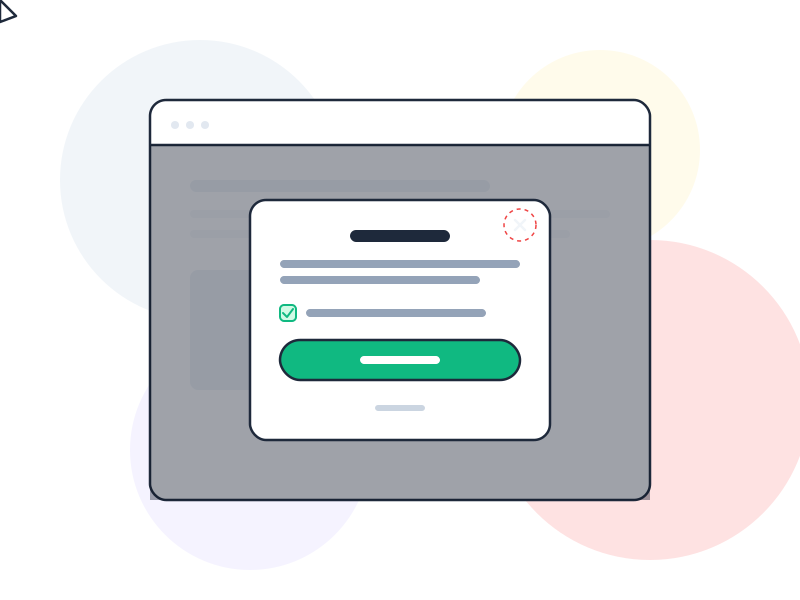
A dark pattern is a deceptive design technique that manipulates users into actions they didn’t intend – like subscribing to a newsletter, sharing personal data, or making a purchase they don’t want. Dark patterns exploit how people read, click, and decide to benefit the business at the user’s expense.
Why It Matters
Dark patterns are everywhere. A 2019 Princeton study found deceptive design on over 10% of 11,000 popular e-commerce sites. A University of Zurich study found them in 95% of 240 trending Android apps. Users encounter them daily, often without realizing it.
For designers, understanding dark patterns is essential for two reasons. First, you need to recognize them so you don’t accidentally create them. A checkout flow that pre-checks the “add insurance” box might feel like a helpful default to the team – but it’s a dark pattern if users don’t notice and end up paying for something they didn’t want. Intention matters less than impact.
Second, dark patterns are increasingly illegal. The EU’s Digital Services Act, California’s CCPA, and the FTC’s enforcement actions explicitly target deceptive design. Companies using dark patterns face fines, lawsuits, and forced redesigns. Beyond legal risk, dark patterns erode trust – and trust, once lost, is nearly impossible to rebuild. Users who feel tricked don’t come back.
How It Works / Types
Dark patterns come in many forms. Here are the most common types every designer should recognize:
Confirmshaming
The option to decline is worded to make users feel guilty or stupid. Instead of a simple “No thanks” button, the decline option reads something like “No, I don’t want to save money” or “I prefer to stay uninformed.” This emotional manipulation pressures users into opting in.
Roach Motel
Easy to get into, nearly impossible to get out of. Signing up takes one click; canceling requires calling a phone number, navigating a maze of “are you sure?” screens, or finding a hidden link buried in account settings. The asymmetry is intentional.
Trick Questions
Confusing wording on opt-in/opt-out checkboxes that trips users into choosing the opposite of what they want. Double negatives like “Uncheck this box if you’d prefer not to receive emails” are designed to confuse – not to inform.
Hidden Costs
Fees, taxes, or charges that only appear at the final step of checkout, after the user has already invested time and effort in the purchase flow. By the time users see the real price, abandoning feels like a loss – which is exactly the point.
Forced Continuity
A free trial that automatically converts to a paid subscription with no warning, no reminder email, and a cancellation process designed to be as difficult as possible. The user intended to try a product for free – they didn’t intend to subscribe.
Bait and Switch
The user sets out to do one thing, but the interface redirects them into doing something else. A “Close” button that actually opens an ad. An “Update” notification that installs additional software. The action label doesn’t match the outcome.
Sneak into Basket
Items are automatically added to the user’s shopping cart during checkout – travel insurance, extended warranties, premium shipping. The user didn’t request them, and the additions are designed to blend in so they go unnoticed.
Real-World Example
Consider the unsubscribe flow on a major email marketing platform. The user clicks “Unsubscribe” at the bottom of an email. Instead of a simple confirmation, they land on a page asking them to log in (a barrier many users won’t clear). After logging in, they’re shown a screen with 12 email category checkboxes, all pre-checked, with a small “unsubscribe from all” link at the bottom in gray text. The prominent button says “Update Preferences” – not “Unsubscribe.”
Each step is designed to make leaving harder: the login barrier, the overwhelming options, the hidden “unsubscribe all” link, and the misleading primary button. A user who just wants to stop receiving emails faces a cognitive load nightmare deliberately engineered to reduce unsubscribe rates.
How to Apply
-
Make opt-out as easy as opt-in. If users can subscribe with one click, they should be able to unsubscribe with one click. If signing up takes 30 seconds, canceling shouldn’t take 30 minutes. Symmetry in effort is the simplest test for fairness.
-
Use clear, neutral language for choices. Both the “accept” and “decline” options should be factual and respectful. “Subscribe to our newsletter” and “No, thanks” is fair. “Subscribe” and “No, I hate saving money” is manipulation.
-
Show the full cost upfront. Display all fees, taxes, and charges on the product page or as early as possible in the checkout user flow. Surprise costs at the final step destroy trust – even when the total is reasonable.
-
Never pre-select paid options. Checkboxes for add-ons, insurance, or upgrades should be unchecked by default. Let users actively choose to add items. Pre-selecting paid options and hoping users won’t notice is the definition of a dark pattern.
-
Run a heuristic evaluation specifically for deceptive patterns. Review your key flows – especially signup, checkout, and cancellation – and ask: “Would a user feel tricked by this?” If the answer is “maybe,” redesign it. If you have to justify a design choice with “technically it’s not misleading,” it’s misleading.
Common Mistakes
Confusing persuasion with deception. Persuasive design – like highlighting a recommended plan, using social proof, or creating urgency for a genuinely limited offer – is ethical. It nudges users toward a decision while keeping all options visible and honest. Dark patterns cross the line when they hide, mislead, or create barriers to the user’s preferred choice.
Copying competitor practices without questioning them. “Everyone in our industry does it” doesn’t make it ethical or legal. Many dark patterns became industry norms before regulation caught up. If your competitor pre-selects add-ons in their cart, that’s a reason to differentiate – not to follow.
Optimizing metrics without considering user impact. A confirmshaming popup might increase newsletter signups by 20%. But those users didn’t genuinely want to subscribe – they were pressured. The result is higher unsubscribe rates, spam complaints, and users who associate your brand with manipulation. Short-term metric gains from dark patterns always come at the cost of long-term trust.
Dark patterns frequently target calls to action – the buttons and decision-point prompts users engage with at critical moments – by making the business-preferred option prominent and the alternative invisible or shameful. The words used in these moments matter enormously: microcopy that frames choices deceptively is often the primary mechanism. Teams tracking conversion rate should treat any tactic that improves metrics by exploiting user confusion as a dark pattern, not a design success.
Further Reading
- Deceptive Patterns in UX: How to Recognize and Avoid Them – Nielsen Norman Group’s overview of dark patterns with examples and identification strategies
- What are Dark Patterns? – Interaction Design Foundation’s guide to deceptive design types and their ethical implications